
Introduction to Nitric Oxide in Inflammation and Immune Regulation
Nitric oxide (NO) is an important biological signaling molecule involved in numerous physiological and pathological processes. Under normal conditions, low concentrations of NO are produced by constitutive nitric oxide synthase (cNOS) enzymes located in endothelial cells and neurons. In these tissues, NO regulates vascular tone, neurotransmission, and intercellular communication.
During immune activation and inflammatory responses, however, a different isoform known as inducible nitric oxide synthase (iNOS) is expressed in immune and inflammatory cells. Unlike cNOS, iNOS generates significantly larger amounts of nitric oxide over prolonged periods. This sustained production of NO plays a complex role in host defense and inflammatory disease progression.
Inducible NO production contributes to antimicrobial and antitumor activity by exerting cytotoxic and cytostatic effects against:
- Bacteria and pathogens
- Tumor cells
- Activated macrophages
- Lymphocytes
- Pancreatic β-cells
At the same time, nitric oxide can suppress T-cell proliferation and inhibit neutrophil migration, indicating that NO possesses both pro-inflammatory and immunoregulatory properties.
Because of these dual biological effects, the role of NO in chronic inflammatory diseases has remained controversial. While excessive NO production is associated with inflammatory disorders such as experimental encephalomyelitis, viral infections, and graft-versus-host disease, it has been unclear whether sustained NO synthesis aggravates tissue damage or instead limits chronic inflammation.
This study provided the first direct evidence that pharmacological inhibition of inducible nitric oxide synthase can significantly suppress chronic inflammatory arthritis and prevent joint destruction.

Experimental Arthritis Model
Streptococcal Cell Wall-Induced Arthritis
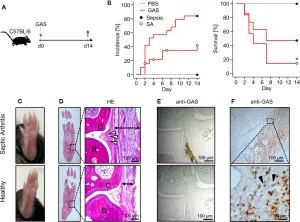
Researchers used a well-established experimental arthritis model in susceptible rats exposed to streptococcal cell wall (SCW) fragments. Injection of SCW components induces a biphasic inflammatory response characterized by:
- An acute inflammatory phase dominated by neutrophil infiltration
- A chronic erosive phase mediated by T cells and monocytes
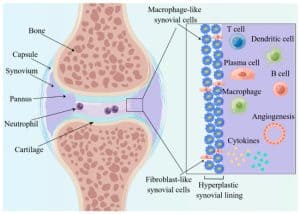
The chronic stage closely resembles human inflammatory arthritis and is associated with:
- Persistent synovial inflammation
- Mononuclear cell infiltration
- Synovial hyperplasia
- Release of inflammatory mediators
- Bone erosion
- Cartilage destruction
Importantly, streptococcal antigens persist within the synovial tissue, maintaining continuous immune activation and chronic inflammation.
Induction of Inducible Nitric Oxide Synthase in Arthritic Tissue
Increased NO Production During Arthritis
Analysis of inflamed synovial tissues demonstrated marked induction of inducible nitric oxide synthase during both acute and chronic phases of arthritis.
Synovial tissues isolated from arthritic joints released high levels of nitric oxide, measured indirectly through nitrite accumulation, whereas healthy control tissues produced minimal NO.
At the molecular level, arthritic synovium exhibited significantly elevated iNOS messenger RNA expression, confirming activation of the nitric oxide pathway during joint inflammation.
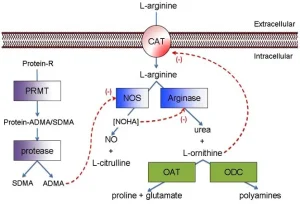
The metabolic conversion of L-arginine into citrulline further demonstrated active nitric oxide synthesis within inflamed tissues.
The relationship can be summarized as:
L-arginine→iNOSNO+L-citrulline
These findings established that nitric oxide production is strongly associated with chronic inflammatory arthritis.
Arginine Metabolism and Oxidative Stress in Arthritic Joints
Interaction Between NOS and Arginase Pathways
The study revealed that inflamed synovial tissue metabolized L-arginine through both nitric oxide synthase and arginase pathways.
Arginase converts L-arginine into urea and ornithine:
L-arginine→arginaseurea+ornithine
In arthritic tissues, substantial arginine metabolism occurred through the nitric oxide pathway, while elevated arginase activity was also observed.
This finding is biologically important because depletion of intracellular L-arginine may promote the generation of reactive oxygen species such as superoxide and hydrogen peroxide. These oxidative molecules are known contributors to cartilage degradation, synovial injury, and bone destruction in inflammatory arthritis.
The data therefore suggest that iNOS activity may amplify joint pathology through both nitric oxide production and oxidative stress mechanisms.
Systemic Activation of Nitric Oxide Production
Peripheral Blood Mononuclear Cells
The inflammatory effects of SCW exposure were not limited to joint tissue.
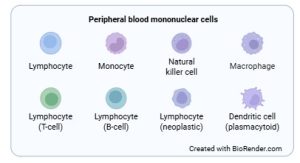
Peripheral blood mononuclear cells (PBMCs) isolated from arthritic animals produced significantly higher levels of nitric oxide than cells obtained from healthy controls. Exposure of these immune cells to SCW fragments in vitro further amplified NO production.
Importantly, treatment with the NOS inhibitor NG-monomethyl-L-arginine (NMMA) markedly reduced nitrite formation in cultured immune cells, confirming that NO synthesis depended on nitric oxide synthase activity.
Additional experiments showed that macrophages and neutrophils directly stimulated by SCW fragments generated substantial amounts of nitric oxide. These observations indicate that multiple inflammatory cell populations contribute to elevated NO levels during arthritis.
Potential cellular sources of NO in arthritic joints include:
- Macrophages
- Neutrophils
- Fibroblasts
- Chondrocytes
- Synovial cells
Therapeutic Suppression of Arthritis Using NMMA
Inhibition of Nitric Oxide Synthase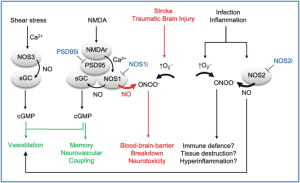
To determine whether nitric oxide actively contributed to tissue destruction, researchers treated arthritic rats with the nitric oxide synthase inhibitor NG-monomethyl-L-arginine (NMMA).
NMMA administration produced dramatic anti-inflammatory effects.
Daily intravenous treatment significantly reduced:
- Synovial inflammation
- Joint swelling
- Leukocyte infiltration
- Cartilage erosion
- Bone destruction
- Clinical arthritis severity
The inhibitory effects were especially pronounced during the chronic immune-mediated phase of arthritis.
Remarkably, NMMA remained effective even when treatment began after arthritis was already established, indicating that ongoing nitric oxide production was required for maintenance of chronic joint inflammation.
Effects on Chronic Immune-Mediated Arthritis
Suppression of T Cell and Macrophage-Dependent Inflammation
The chronic phase of SCW-induced arthritis is characterized primarily by activation of T cells and macrophages.
NOS inhibition with NMMA substantially reduced chronic inflammatory responses, suggesting that nitric oxide is a critical mediator of immune-driven tissue destruction.
Clinical arthritis scores were dramatically lower in NMMA-treated animals compared with untreated arthritic controls.
Additionally, systemic nitric oxide production by circulating mononuclear cells was reduced by approximately 70% following NMMA therapy.
Interestingly, NMMA inhibited nitric oxide production without significantly altering iNOS gene expression, indicating that the drug acted primarily by blocking enzyme activity rather than suppressing transcription.
Mechanisms of Nitric Oxide-Mediated Joint Damage
Potential Pathophysiological Pathways
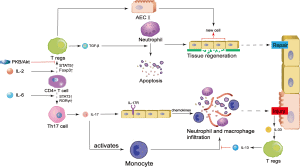
The exact mechanisms through which nitric oxide promotes arthritic tissue destruction remain complex and multifactorial.
Several potential mechanisms have been proposed:
Direct Cytotoxicity
Excessive NO concentrations may directly damage synovial cells, chondrocytes, and surrounding tissues.
Oxidative Stress
NO can interact with reactive oxygen species to form highly toxic intermediates such as peroxynitrite, which damages proteins, lipids, DNA, and cartilage matrix components.
Increased Vascular Permeability
Nitric oxide may enhance permeability of synovial microvasculature, facilitating inflammatory cell infiltration into joints.
Altered Cellular Metabolism
NO may disrupt normal metabolism and repair mechanisms within cartilage and synovial tissue.
Immune Regulation
Nitric oxide may influence suppressor T-cell activity and protease regulation, indirectly modulating chronic inflammation.
Together, these effects contribute to progressive joint destruction and chronic synovitis.
Clinical Implications for Rheumatoid Arthritis
Potential Role of Selective iNOS Inhibitors
The findings from this study were particularly significant because they demonstrated for the first time that inhibition of nitric oxide synthesis could suppress destructive arthritis.
The results suggest that excessive inducible nitric oxide production is not merely a byproduct of inflammation but an active participant in tissue damage.
Since rheumatoid arthritis affects approximately 1% of the global population, identification of new therapeutic targets remains essential.
Detection of elevated nitrite levels in synovial fluid from patients with inflammatory arthritis further supports the clinical relevance of the NO pathway in human disease.
These findings raise the possibility that selective inhibitors of inducible nitric oxide synthase may provide therapeutic benefit in:
- Rheumatoid arthritis
- Chronic inflammatory arthritis
- Autoimmune disorders
- Synovitis
- Other inflammatory diseases
Limitations of Non-Selective NOS Inhibition
Constitutive vs Inducible NOS
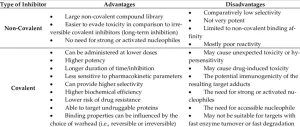
An important limitation of NMMA is that it inhibits both inducible and constitutive nitric oxide synthase isoforms.
Constitutive NOS enzymes play essential physiological roles in:
- Neurotransmission
- Endothelial function
- Vascular regulation
- Cellular signaling
Therefore, long-term non-selective NOS inhibition could potentially interfere with normal biological functions.
Despite this concern, NMMA-treated animals in the study did not exhibit major toxic or neurological side effects during prolonged treatment.
Nevertheless, the development of selective iNOS inhibitors remains preferable for future therapeutic applications.
Conclusion
This study demonstrated that inducible nitric oxide synthase plays a major role in chronic inflammatory arthritis and joint destruction.
Key findings include:
- Increased iNOS expression in arthritic synovial tissue
- Elevated nitric oxide production during acute and chronic inflammation
- Systemic activation of NO synthesis in immune cells
- Significant suppression of arthritis following NOS inhibition
- Reduction of inflammatory cell infiltration and tissue erosion by NMMA
The results strongly support the concept that excessive nitric oxide production contributes directly to chronic inflammatory tissue damage.
Most importantly, inhibition of the nitric oxide pathway was capable of suppressing established arthritis, suggesting that iNOS represents a promising therapeutic target for inflammatory joint diseases.
Future development of selective inducible nitric oxide synthase inhibitors may provide new treatment strategies for rheumatoid arthritis and other chronic inflammatory disorders.