
Introduction to Cryptococcal Meningitis
Cryptococcal meningitis is a severe fungal infection of the central nervous system caused mainly by the encapsulated yeast Cryptococcus neoformans. Over the last few decades, the global incidence of cryptococcal infections has increased significantly due to the HIV/AIDS pandemic and the widespread use of immunosuppressive therapies. The disease is considered one of the most important opportunistic infections in patients with advanced HIV infection and remains a major AIDS-defining illness, particularly in regions such as Southeast Asia and sub-Saharan Africa.
In highly affected African regions, cryptococcal meningitis has become the leading cause of community-acquired meningitis, surpassing bacterial pathogens such as Streptococcus pneumoniae and Neisseria meningitidis. Mortality rates remain extremely high despite antifungal therapy, especially in low-resource settings where access to amphotericin B, flucytosine, and intracranial pressure management is limited. In many African HIV cohorts, cryptococcosis contributes to a large percentage of HIV-related deaths.
The expansion of antiretroviral therapy programs has improved long-term survival prospects for HIV-infected individuals. However, effective management during the acute phase of cryptococcal meningitis remains essential. Current research focuses on improving antifungal regimens, reducing fungal burden more rapidly, and optimizing the management of elevated intracranial pressure.
Mycology and Ecology of Cryptococcus neoformans
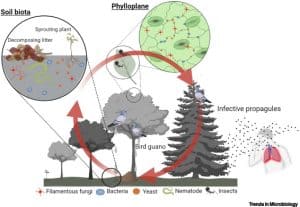
Cryptococcus neoformans is an environmental fungal organism that naturally exists as a saprophyte in soil contaminated with bird droppings, especially pigeon excreta. Human infection is considered accidental because person-to-person transmission is extremely rare.
The organism possesses several biological characteristics that enable survival in both environmental and mammalian hosts. In laboratory conditions, sexual reproduction between mating types can produce hyphae and basidiospores. In clinical settings, however, the fungus typically appears as a budding yeast with spherical or oval cells measuring approximately 5–10 μm in diameter. A thick polysaccharide capsule surrounds the yeast cell and serves as a major virulence factor. This capsule is also the target detected in cryptococcal antigen diagnostic tests.
Two major pathogenic species are recognized:
- Cryptococcus neoformans
- Serotypes A, D, and AD
- Commonly associated with immunocompromised patients
- Cryptococcus gattii
- Serotypes B and C
- Frequently infects immunocompetent individuals
- More prevalent in tropical and subtropical regions
Cryptococcus gattii has been linked to eucalyptus trees and decaying wood, while both species have been isolated from tree hollows and decomposing plant material. The presence of laccase enzymes may contribute to lignin degradation and environmental persistence.
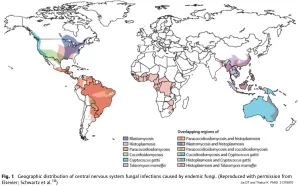
Exposure to cryptococcal organisms appears common worldwide, often beginning during childhood. Nevertheless, the exact environmental conditions promoting infection remain incompletely understood. Notably, an outbreak of C. gattii infection occurred on Vancouver Island in Canada, affecting humans and animals, including dogs, cats, llamas, and marine mammals.
Epidemiology of Cryptococcosis
Before the emergence of HIV/AIDS, cryptococcal disease was relatively uncommon. During the 1980s and 1990s, however, cryptococcosis became a major opportunistic infection among AIDS patients.
In developed countries, the introduction of fluconazole prophylaxis and highly active antiretroviral therapy (HAART) significantly reduced disease incidence. In contrast, the burden remains extremely high in many African and Asian countries.
In Thailand, cryptococcosis represented a substantial proportion of AIDS-defining illnesses. In Uganda, incidence rates among patients with severe immunosuppression were particularly elevated. In Southern Africa, cryptococcal meningitis now accounts for a major percentage of laboratory-confirmed meningitis cases.
Other populations at risk include:
- Organ transplant recipients
- Patients receiving corticosteroids
- Individuals with malignancies
- Patients with chronic renal, liver, or lung disease
- Individuals with autoimmune and rheumatologic disorders
- Patients undergoing chemotherapy or biological immunosuppression
Interestingly, some patients develop cryptococcosis without any identifiable immunodeficiency.
Pathogenesis and Host Immune Response
Route of Infection
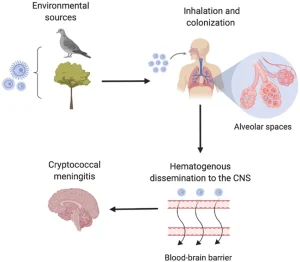
Cryptococcal infection usually begins after inhalation of fungal cells or spores into the lungs. Pulmonary infection may remain asymptomatic or become latent within granulomatous lesions. In susceptible individuals, the fungus disseminates through the bloodstream and frequently invades the brain and meninges.
Latent Infection
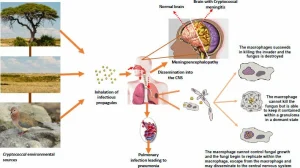
Evidence suggests that cryptococcal organisms can remain dormant within pulmonary granulomas for years before reactivation occurs, especially when immune function declines. Reactivation is considered an important mechanism in HIV-associated cryptococcosis.
Immune Defense Mechanisms
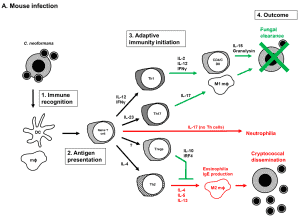
Protection against cryptococcal infection depends largely on cell-mediated immunity involving: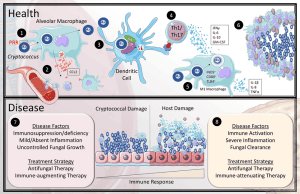
- CD4+ T lymphocytes
- CD8+ T lymphocytes
- Th1 cytokine responses
Several cytokines play protective roles, including:
- Interferon-gamma (IFN-γ)
- Tumor necrosis factor-alpha (TNF-α)
- Interleukin-12 (IL-12)
- Interleukin-18 (IL-18)
Higher cerebrospinal fluid IFN-γ levels correlate with faster fungal clearance and improved survival.
Virulence Factors
Cryptococcus neoformans possesses multiple virulence mechanisms:
- Polysaccharide capsule that inhibits phagocytosis
- Melanin production protecting against oxidative damage
- Ability to survive at 37°C
- Intracellular survival within macrophages
- Laccase enzyme facilitating tissue invasion
Melanin synthesis from L-dopa may partly explain the organism’s preference for central nervous system tissues.
Clinical Manifestations
Pulmonary Cryptococcosis
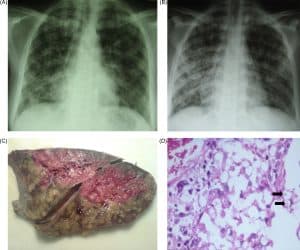
Pulmonary disease ranges from asymptomatic colonization to severe pneumonia. Symptoms may include:
- Cough
- Fever
- Chest pain
- Dyspnea
Cryptococcal Meningitis
Meningitis is the most common and severe manifestation. Because brain parenchyma is often involved, the condition is more accurately termed meningoencephalitis.
Typical symptoms include:
- Persistent headache
- Fever
- Malaise
- Altered mental status
- Neck stiffness
- Visual disturbances
- Cranial nerve palsies
Complications may include:
- Elevated intracranial pressure
- Hydrocephalus
- Hearing loss
- Cognitive impairment
- Seizures
- Neurological deficits
In HIV-positive patients, disease commonly occurs when CD4 counts fall below 100 cells/μL.
Radiological Findings
Chest Imaging
Pulmonary imaging may reveal:
- Pulmonary nodules
- Alveolar infiltrates
- Interstitial infiltrates
Brain Imaging
CT and MRI findings may include:
- Meningeal enhancement
- Cerebral edema
- Hydrocephalus
- Cryptococcomas
- Basal ganglia lesions
MRI is generally more sensitive than CT for detecting CNS lesions.
Laboratory Diagnosis
Cerebrospinal Fluid Analysis
CSF findings commonly include:
- Elevated protein
- Low glucose
- Lymphocytic pleocytosis
In HIV-associated disease, inflammatory responses may be minimal.
India Ink Microscopy
India ink staining can directly visualize encapsulated yeast cells and remains highly useful in AIDS patients with high fungal burden.
Culture
Cultures from CSF, blood, or tissue typically grow within 48–72 hours on fungal media.
Cryptococcal Antigen Testing
Cryptococcal antigen detection in serum or CSF provides excellent sensitivity and specificity. High antigen titers correlate with poor prognosis and increased fungal burden.
Histopathology
Special stains used for tissue diagnosis include:
- Gomori methenamine silver stain
- Periodic acid–Schiff stain
- Mucicarmine stain
- Fontana–Masson stain
Antifungal Treatment
Amphotericin B
Amphotericin B remains a cornerstone of therapy due to its potent fungicidal activity. It acts by binding ergosterol within fungal membranes.
Advantages:
- Rapid fungal killing
- Effective CNS penetration
Limitations:
- Nephrotoxicity
- Electrolyte disturbances
- Intravenous administration requirements
Liposomal formulations reduce renal toxicity.
Flucytosine
Flucytosine inhibits fungal nucleic acid synthesis and demonstrates synergistic activity with amphotericin B.
Benefits include:
- Faster CSF sterilization
- Reduced relapse rates
Potential toxicities:
- Bone marrow suppression
- Gastrointestinal side effects
Fluconazole
Fluconazole is widely used due to:
- Excellent oral bioavailability
- Good CSF penetration
- Lower toxicity
However, fluconazole is primarily fungistatic and generally less rapidly effective than amphotericin B–based regimens.
Current treatment strategies often combine:
- Induction therapy with amphotericin B plus flucytosine
- Consolidation therapy with fluconazole
- Maintenance therapy until immune recovery
Raised Intracranial Pressure
Elevated intracranial pressure is one of the most dangerous complications of cryptococcal meningitis and significantly contributes to mortality.
Management includes:
- Serial lumbar punctures
- CSF drainage
- Ventricular shunting when necessary
Medical therapies such as mannitol and acetazolamide have not demonstrated consistent benefit.
Immune Reconstitution and Adjunctive Therapy
In HIV-infected patients, initiation of antiretroviral therapy improves long-term prognosis but may trigger immune reconstitution inflammatory syndrome (IRIS).
IRIS manifestations may include:
- Recurrent headache
- Fever
- New neurological symptoms
- Increased intracranial pressure
Adjunctive immunotherapy with recombinant IFN-γ has shown promising results in enhancing fungal clearance.
Prognostic Factors
Poor prognostic indicators include:
- Altered mental status
- High cryptococcal antigen titers
- High fungal burden
- Elevated intracranial pressure
- Low CSF white blood cell count
- Delayed diagnosis
- Severe immunosuppression
Mortality remains especially high in resource-limited countries.
Prevention Strategies
Preventive approaches include:
- Early HIV diagnosis
- Antiretroviral therapy
- Fluconazole prophylaxis in high-risk patients
- Screening for cryptococcal antigenemia in advanced HIV infection
Experimental vaccine research is ongoing but no licensed vaccine currently exists.
Future Perspectives
Future improvements in cryptococcal meningitis management may involve:
- More effective antifungal combinations
- Shorter induction regimens
- Improved access to amphotericin B and flucytosine
- Better management of intracranial pressure
- Novel immunotherapies
- Enhanced rapid diagnostic methods
Although new antifungal agents are under investigation, optimizing currently available therapies and expanding access in high-burden regions remain critical priorities in global health.